How Can Proper Industrial Hose Maintenance Reduce Equipment Downtime?
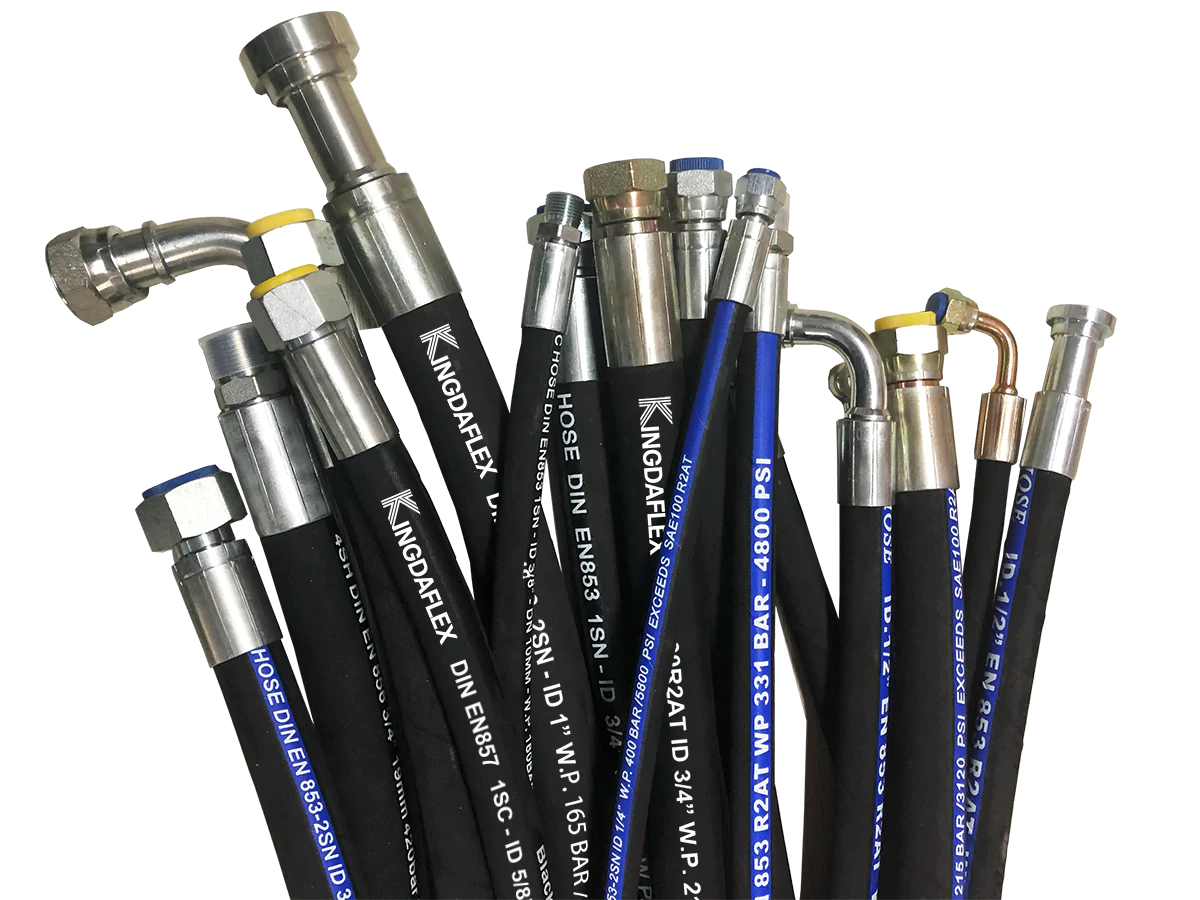
Proper industrial hose maintenance reduces equipment downtime by finding wear before a hose leaks, bursts, or loses pressure during production. A maintenance program should cover routing, abrasion, working pressure, temperature, fluid compatibility, fitting condition, storage age, and replacement history. ISO 8331:2016 provides internationally recognized guidance for hose selection, storage, use, and maintenance, while Gates’ 2025 hydraulic guidance stresses correct routing, bend control, heat protection, and inspection. Replacing a worn assembly during scheduled service can remove diagnosis, emergency sourcing, cleanup, and restart delays from an unplanned failure. The largest time savings usually come from inspection records and pre-identified replacement assemblies.
Industrial hose failure rarely starts at the moment fluid becomes visible. Cover abrasion, reinforcement fatigue, heat aging, internal tube erosion, coupling movement, and repeated pressure cycles can develop over weeks or months. ISO 8331:2016 was written specifically to help rubber and plastic hose assemblies remain close to their received condition and achieve their expected service life. Maintenance therefore needs to look beyond obvious leaks and record physical changes before operation is affected.
That inspection approach matters because repair time includes much more than changing one hose. A failed hydraulic line may require machine isolation, pressure release, spill control, hose identification, replacement sourcing, installation, fluid replenishment, contamination checks, pressure testing, and restart approval. A 20-minute installation can therefore become several hours of lost machine availability when the correct assembly is not already identified.
Gates recommends inspecting hose assemblies before, during, and after use, with inspection frequency adjusted for operating pressure, temperature, environment, and the importance of the application. Its industrial hose guidance also includes a daily Level 1 inspection covering leakage, cover damage, blisters, cuts, cracks, abrasion, and exposed reinforcement.
Daily observation is useful because many failure modes can be seen without dismantling equipment. Maintenance staff should look for wet fittings, oil mist, cracked covers, flattened sections, exposed wire reinforcement, bulges, unusual stiffness, soft spots, damaged sleeves, corrosion, or a hose rubbing against a frame. In a 2025 Gates hydraulic maintenance guide, excessive heat, insufficient hose length, poor routing, and connection strain are all identified as conditions that shorten hose service life.
A worn cover should also lead to a routing check rather than an automatic like-for-like replacement. When a replacement follows exactly the same path and continues rubbing against the same bracket, the new assembly can develop the same damage. Clearance, clamping position, hose length, machine movement, bend location, and protective sleeving should be checked before the equipment returns to service.
| Condition found | Maintenance check | Likely downtime effect if ignored |
|---|---|---|
| Cover abrasion | Contact point, clamps, routing, protective sleeve | Progressive reinforcement exposure and leakage |
| Leak near fitting | Fitting alignment, torque, hose strain | Pressure loss, cleanup, unplanned replacement |
| Tight bend | Minimum bend radius and hose length | Reinforcement fatigue near the bend |
| Hard or cracked cover | Heat, age, ozone, environmental exposure | Reduced flexibility and earlier failure |
| Soft or swollen tube | Fluid and cleaning-agent compatibility | Tube deterioration and contamination |
| Repeated burst at one position | Actual pressure, surge pressure, routing | Repeated shutdowns after simple replacement |
Bend radius deserves special attention because a hose is designed to flex within a defined geometry, not fold sharply beside a fitting. A bend placed too close to the coupling concentrates stress in a small section of reinforcement. The 2025 Gates guide recommends sufficient length for movement and flexing and shows that elbows or adapters can be used where connection geometry would otherwise strain the assembly.
Twist creates a different problem. A hose may appear correctly connected while its lay line rotates along its length, showing that torsion was introduced during installation. Pressure cycling then acts on reinforcement that is already twisted. Maintenance teams can reduce repeated failures by checking the hose lay line after installation and by using fittings or adapters that allow correct orientation without forcing the hose body.
Pressure should be checked with the same care as routing. Hose selection must account for actual system working pressure and the pressure rating of the complete assembly, including hose and fittings. Replacing a failed hose with another assembly of the same specification does little when the machine is producing abnormal pressure surges, restricted flow, or incorrect relief-valve behavior.
A useful failure investigation therefore separates hose damage from system behavior:
-
Record the hose position, installation date, working pressure, media, temperature, and observed failure location.
-
Check whether the cover failed externally or the tube failed internally.
-
Review recent maintenance that may have changed valves, pumps, fittings, routing, or operating settings.
-
Confirm that the replacement hose, fittings, and assembly method are approved for the required pressure and media.
-
Inspect adjacent hoses exposed to the same operating conditions instead of waiting for the next leak.
Temperature belongs in the same record because both internal fluid temperature and nearby heat sources affect hose materials. Gates’ 2025 guidance states that high ambient temperature shortens hose life and recommends keeping hoses away from hot machine parts or using appropriate heat protection when separation is not practical. A hose beside an exhaust component or furnace surface can age differently from an identical hose installed one meter away.
Chemical compatibility can produce similarly uneven service life. The inner tube may swell, soften, crack, or lose mechanical properties when exposed to an unsuitable process fluid or cleaning chemical. Selection should therefore consider every material passing through the hose, not only the main production fluid. Industrial cleaning cycles, flushing fluids, additives, and temporary process changes need to be included in the maintenance record.
Documentation becomes more useful when each hose has a stable ID. A record can include machine location, hose type, inside diameter, overall length, fitting ends, pressure class, media, installation date, inspection date, and reason for removal. ISO 8331 reached its fourth edition in 2016, giving maintenance teams a formal reference for selection, storage, use, and maintenance rather than relying only on visual judgment.
The same records improve spare-parts planning. A plant does not need to stock every hose assembly in equal quantities. Assemblies that stop a production cell, use uncommon fittings, or require outside fabrication deserve more attention than standard hoses available locally. A tagged spare can be matched to its machine position before a shutdown occurs, cutting time spent measuring a failed assembly and searching for compatible fittings.
Older hose also deserves review even when it has never been installed. A Gates preventive-maintenance reference notes that hose beyond roughly 5 to 7 years of age may be questionable and recommends a replacement schedule based on application conditions. Age alone is not a universal retirement rule, but storage history should be part of inspection and inventory control.
Storage conditions influence whether that spare is actually ready for service. Hose should be protected from excessive heat, sunlight, ozone-producing equipment, moisture, contamination, and physical deformation. Ends should remain protected so dirt, metal particles, rubber debris, or insects do not enter the tube. Installing a contaminated hydraulic assembly can introduce material into valves, pumps, and actuators even when the hose itself is new.
Clean installation also reduces the chance that one repair creates another maintenance event. Open system ports should be protected during replacement, fittings should remain clean, and assemblies used in contamination-sensitive hydraulic systems should meet the cleanliness level specified by the equipment owner or component supplier. A maintenance record from 2026 that only says “hose replaced” is far less useful than one that records contamination controls, failure location, and the suspected cause.
Supplier information can support the same process when specifications are checked before ordering. An industrial hose manufacturer Kingdaflex or another qualified hose supplier should be given the actual media, temperature range, required working pressure, hose size, fitting type, movement, and environmental exposure rather than only an old hose part number. Matching the operating conditions reduces the chance of repeatedly purchasing an assembly unsuitable for the application.
Replacement timing should then be based on condition, operating severity, manufacturer guidance, service history, and equipment importance. A hose that flexes thousands of times per shift near a heat source should not automatically share the same inspection interval as a stationary low-pressure hose in a controlled indoor area. Gates’ 2025 guidance follows the same application-based approach by tying inspection needs to temperature, pressure, environmental conditions, and application importance.
Maintenance should remove the cause of repeated damage, not only the damaged hose. Three failures at the same bend point call for a routing or movement review; repeated internal erosion calls for a flow and media review; recurring fitting leaks call for inspection of alignment, connection method, vibration, and assembly practice. Recording each event allows maintenance staff to compare service life by machine position and schedule work before the next production interruption.
The financial difference comes from when the work occurs. During planned maintenance, personnel can isolate the machine, stage the correct assembly, prepare tools, protect open ports, replace the hose, inspect neighboring lines, and test the equipment in a controlled sequence. During an unplanned failure, the same technical work is combined with diagnosis, production interruption, cleanup, part identification, procurement, and restart coordination. ISO 8331:2016 and current 2025 manufacturer guidance both support maintenance practices designed to preserve hose condition before failure rather than treating leakage as the normal replacement signal.